


 +86 18130251359
 teflowpumps@tlpumps.com


Coating is a core process for surface protection and decoration of metal workpieces. Wet processes run through the whole production line, including pickling, phosphating and degreasing in pretreatment, electrophoretic bath circulation, paint delivery, spray systems, as well as waste liquid and coating wastewater treatment at the downstream stage. The coating service conditions cover a wide range of media: pickling solutions, phosphating fluids, alkaline degreasers, electrophoretic paints, pigment-containing coatings with solid particles, and coating wastewater. These media contain phosphating sludge, pigment powder and metal rust particles. Improper pump selection will easily lead to corrosive leakage, impeller wear and particle clogging. Impurity leaching from the pump may mix into the bath solution, resulting in pinholes, particle blemishes and coating film defects on workpieces, which directly reduce the yield of finished coated products.
Common failures in many coating production lines include debris generated by worn mechanical seals contaminating bath liquid; ordinary metal pumps corroded by acids and alkalis, with leached metal ions damaging phosphating films and electrophoresis results; sludge and pigment particles depositing in pumps with narrow flow passages, causing pipeline blockage, unstable spray pressure and uneven surface treatment of workpieces. The core requirements for pump selection in the coating industry are acid and alkali resistance, leak-free operation, wear resistance against particles, smooth flow passages to prevent clogging, and avoidance of bath liquid contamination by foreign impurities.
I. Working Condition Breakdown for Each Coating Process
1. Pretreatment: Pickling, Degreasing and Phosphating
Degreasers are mostly alkaline chemicals, pickling uses acidic media, and phosphating liquid contains large amounts of phosphating sediment. The media are corrosive with abundant suspended solid particles. The system runs 24 hours continuously for spray circulation, requiring pumps with smooth wetted surfaces that resist sludge deposition and deliver good wear and corrosion resistance.
2. Electrophoretic Bath Circulation
Electrophoretic paint media are highly sensitive to impurities. Pumps must not release foreign substances to prevent particles from adhering to workpiece coating films. Stable flow is required for continuous stirring and circulation to avoid paint sedimentation and introduction of external contaminants.
3. Paint Delivery
Paints contain solid pigment and filler particles with relatively high viscosity. Particles tend to accumulate, so pumps need wide flow passages to lower clogging risks and prevent excessive shearing from damaging the paint system.
4. Spray Systems
Various pretreatment chemicals are delivered continuously, and stable pressure is critical. Pressure fluctuations will create spray blind spots on workpieces and cause inconsistent cleaning and phosphating performance.
5. Coating Waste Liquid & Wastewater Treatment
Mixed acid-base wastewater carries rust sludge and paint residue with variable composition, featuring both corrosion and particle abrasion.
II. Recommended Primary Pump Type: Fluoroplastic Magnetic Drive Pump
Fluoroplastic magnetic drive pumps are the preferred option for the full set of wet coating processes. Adopting a magnetic coupling seal-less structure that eliminates traditional mechanical seals, the pump fundamentally removes debris from seal friction and achieves zero liquid leakage. No impurities will shed to contaminate bath liquid, perfectly meeting the anti-contamination requirements of coating lines.
Material Selection
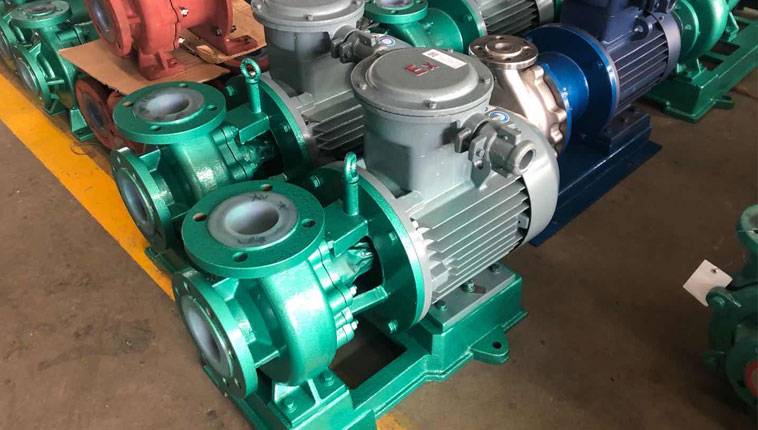
PVDF: Suitable for highly corrosive conditions such as pickling, phosphating fluid and degreasers. It resists alternating acid and alkali exposure with dense, smooth surfaces that reduce adhesion of phosphating sludge and pigment particles, delivering outstanding wear resistance. It is the mainstream material for coating pretreatment.
FEP/PFA Fully Fluorinated Wetted Components: For high-end precision workpiece coating with strict bath liquid cleanliness requirements. It features superior chemical inertness and extremely low ion leaching, ideal for high-quality electrophoretic paint transfer.
ETFE: For ambient-temperature coating rinse water and low-corrosion waste liquid circulation. It is integrally molded without fillers, resisting debris shedding and stress cracking. With strong chemical inertness, tolerance to alternating acids and alkalis, and smooth inner walls that reduce adhesion of paint sludge and rust particles, it offers excellent cost performance.
The pump body can be equipped with a wide-flow impeller structure to improve passage capacity for fine phosphating sludge and pigment particles and reduce solid deposition. The integrally molded wetted parts have smooth inner walls to minimize sludge scaling. The sealed magnetic drive structure prevents acid and alkali liquid leakage, cuts corrosive mist in workshops and improves working environments.
III. Pump Types Not Recommended
❌ Traditional centrifugal pumps with mechanical seals: Friction of mechanical seals easily produces debris. Springs and metal components are vulnerable to acid and alkali corrosion. Debris and metal ions entering bath liquid trigger particle defects and pinholes on coating films. They should be avoided for precision coating bath circulation.
❌ Conventional stainless steel pumps: 304/316L stainless steel cannot withstand corrosion from pickling solutions and strong phosphating fluids. Corrosion of the pump releases metal ions and interferes with phosphating reactions and electrophoretic film formation. Direct contact with strongly corrosive coating chemical flow paths is prohibited.
❌ Small pumps with narrow flow passages: Narrow clearances readily trap and block phosphating sludge and paint residue, leading to flow decay, fluctuating spray pressure and uneven workpiece surface treatment.
IV. Key Points for Coating Pump Selection
1. Prioritize wear resistance and wide flow passages: As media contain phosphating sludge and pigment particles, select wide-flow impellers. A pre-filter can be fitted at the pump inlet to intercept large particles, protect the pump and reduce particle levels in bath liquid.
2. Strictly control bath liquid contamination risks: All wetted parts in contact with chemicals must not expose bare metal to prevent metal ion dissolution that impairs phosphating and electrophoretic coating quality.
3. Stable flow and pressure: Spray and electrophoresis circulation demand stable pressure. Reserve a 10%~15% margin during selection to match nozzle and pipeline resistance and ensure uniform workpiece spraying.
4. Install dry-run protection: Magnetic drive pumps must not run dry. Coating lines are recommended to install dry-run protection and liquid level interlock devices to prevent isolation sleeve burnout caused by liquid shortage and line shutdown.
5. Adapt to continuous operation: Most coating production lines run for extended periods. Pump bearings and isolation sleeve materials must support long-duration operation to cut maintenance downtime.
V. Summary
Processes including coating pretreatment, electrophoresis and paint delivery feature complex acid-base media with various solid particles, and bath liquids are sensitive to impurities and metal ions. With advantages of seal-free zero leakage, acid & alkali resistance and optional wide-flow anti-particle structures, fluoroplastic magnetic drive pumps are compatible with pickling, phosphating, degreasing, electrophoresis circulation, paint delivery, spraying and waste liquid treatment. They effectively prevent particle contamination of bath liquid, reduce coating defects and stabilize the yield of coated workpieces, serving as the optimal solution for chemical liquid transfer in coating wet processes.



 +86+0563-5093318
